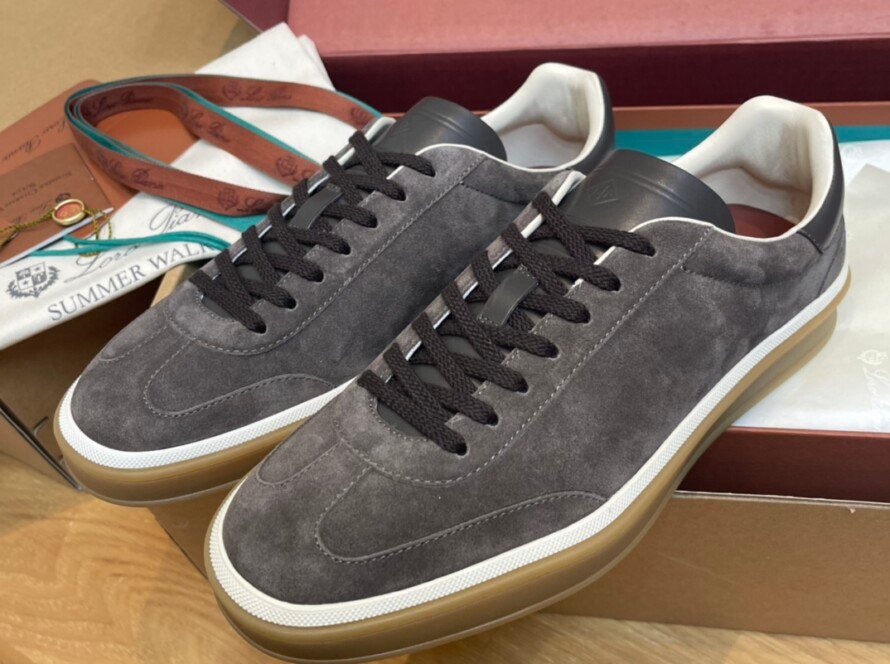
You open your closet to pick out a pair of handmade oxfords for an important meeting, only to find that the toe box is covered in fuzzy green-and-white intrusions. Your stomach will drop. Mold on leather shoes isn’t just an aesthetic disaster, it’s a silent attacker that can compromise the structural integrity of your precious footwear. For owners of luxury footwear—whether custom Saint Laurent boots, vintage Ferragamo loafers, or limited-edition Berluti masterpieces—knowing how to combat mold is crucial to maintaining financial and sentimental value.
Why luxury leather is fragile
Leather is a living material, a by-product of the hand-tanning process that gives it character but also an organic fragility. High-end leathers (full-grain, vegetable-tanned or exotic) lack the synthetic coatings found in mass-market alternatives, making them porous and susceptible to microbial colonization under certain conditions:
- Humidity above 60%: Spores multiply in moist environments, such as poorly ventilated closets, damp basements, or storage rooms.
- organic residue: Dust, skin cells or unnoticed sweat provide a nutritional base for mold.
- dark, stagnant air: Lack of airflow and UV rays accelerate spore germination.
Luxury shoes are especially at risk due to infrequent wear (which allows spores to grow) and complex construction. Mold can penetrate seams, welts, and leather linings, hiding damage until it is irreversible.
Three aspects of shoe molding (and its threats)
White mold (Aspergillus):
The powdery or fluffy patches look superficial, but secrete enzymes that break down leather collagen.Green/Black Mold (Penicillium/Stachybotrys):
Thick, pungent growths indicate deep penetration. Stains may persist even after removal.- biofilm "invisible mold":
A sticky, translucent residue often mistaken for "dirt." This precursor to visible mold absorbs natural oils from leather.
notes: Ignoring mold can not only ruin your shoes, but long-term exposure to certain strains, such as Stachybotrys vitis, can pose respiratory health risks.
Emergency response: first 48 hours
Quarantine immediately:
Place shoes in a sealed bag to prevent spores from migrating to other items.dry strategically:
Never use direct heat (hair dryer, radiator). Instead, stuff your shoes with acid-free tissue paper and place them in a room with 40% humidity. Professional dehumidifiers with HEPA filtration are ideal.- Surface debris removal:
Use a soft horsehair brush to gently sweep away dry spores outdoors to avoid indoor contamination.
The Art of Quality Leather Mold Remediation
warn: Never use household bleach, vinegar or alcohol on luxury leather as these dyes will degrade tannins and accelerate cracking.
Professional Grade Cleaning Protocol
micro assessment:
Under a magnifying glass, the cobbler determines the depth of the mold. Surface growth is treatable; the mycelium (root network) in the leather layer may need repair.pH neutral cleaning:
Featured products such as Saphir Medaille d’Or All Purpose Cleaner or Collonil Leather Gel Removes spores without changing leather pH. Use a microfiber cloth to apply in circular motions.Supplement tannins:
Molds consume natural lubricants. Once dry (24-48 hours), condition with a lanolin-based cream, e.g. Bicmore Bic 4 or Sapphire refurbished machine to restore flexibility.- Pigment renaissance:
For stained leather, use a color-matched cream to cover up remaining stains. Exotic animals (crocodiles, lizards) require skilled grooming to retain scale patterns.
When to consult a conservator
Seek professional intervention if:
- Recurrence of mold after treatment
- Shoes have historical value (e.g. Gucci loafers from the 1950s)
- Exotic skins (stingray, crocodile) show warping
Services such as Porter and Son (UK) or B. Nelson Shoe Repair (New York City) provides museum-quality restoration, including ozone treatment and anaerobic disinfection.
Harden your collection to protect against future attacks
Storage Alchemy
- climate control: Maintain a humidity of 45-55% using a calibrated hygrometer. Invest in armoire-style cedar closets—their terpenes repel insects and mildew.
- airflow engineering: Install a quiet, low-profile fan in your shoe cabinet. Rotate weekly to prevent microclimate stagnation.
- Silica Defense: Monthly replacement of standard silica packs with renewable options, e.g. Eva-dry Renewable Dehumidifier.
seasonal rituals
- Post-wear protocol: Wipe soles/bottoms with disinfectant wipes (e.g. Soft sole fresh) to eliminate outdoor spores.
- Check every two years: Use a UV flashlight to detect hidden biofilm on rarely worn shoes.
in conclusion
Mold on leather shoes is a battle at the intersection of microbiology and art. For wealthy collectors, the stakes go beyond cost – every wear and tear tells a story, every patina reflects a journey. By adopting a protector’s mentality (vigilant monitoring, gentle restoration, and environmental control), your shoes will defy time, ensuring they stride confidently from the boardroom to the black-tie soiree for decades to come.
FAQ: Protecting Luxury Footwear
Question 1: Can I use vinegar to remove mold from my $1,500 Edward Green boots?
No. The acidity of vinegar (pH ~2.5) can destabilize leather tannins. Use a leather cleaner with a neutral pH (~5.5-7).
Q2: Does insurance cover mold damage to designer shoes?
Maybe. High value items riders (such as Chubb personal effects policies) often cover "sudden/accidental" Whether the mold is associated with a documented incident (such as a pipe leak). Excludes degradation from daily wear and tear.
Q3: Is UV shoe disinfectant safe for calfskin?
Yes, in moderation. Use handheld UV-C devices (e.g. stree shoes) for up to 15 minutes to avoid fading.
Q4: How to preserve moldy shoe boxes (such as Louboutin original packaging)?
The boxes were frozen at -10°F for 72 hours to kill spores and then vacuum sealed in archival plastic with silicone gel.
Q5: Can moldy insoles be salvaged?
Replace immediately. Memory foam and cork linings are non-recoverable. Choose antimicrobial alternatives (e.g. Ultra Carbon Fiber Co., Ltd.) inhibit future growth.
In the world of luxury footwear, knowledge is not just power, it’s protection. Treat your leather with curatorial respect and it will reward you with timeless elegance.